You want your child to excel, but the constant battle over screen time feels draining. It is frustrating to watch them drift through passive entertainment when they could be developing vital skills. Learning with games parentips offers a refreshing solution that bridges the gap between fun and academic growth. By choosing high-quality interactive experiences, you can spark curiosity and build critical thinking without the usual struggle.
Quick Comparison: Passive Media vs. Active Game Learning
| Feature | Passive Scrolling | Learning with Games Parentips |
| Engagement | Low (Boredom) | High (Active Participation) |
| Brain Impact | Minimal Retention | Enhanced Problem Solving |
| Feedback | None | Instant & Encouraging |
| Social Skills | Isolation | Collaboration & Empathy |
Transforming Playtime Into a Growth Engine
Children naturally learn through play, yet many modern digital habits ignore this biological advantage. When you apply learning with games parentips, you turn a device into a personal tutor that adapts to your child’s pace. This method focuses on “edutainment,” where the goal is mastery rather than just passing the time.
Selecting Age-Appropriate Challenges
Success begins with choosing the right level of difficulty. For toddlers, focus on games that teach shape recognition and basic motor skills like Peek-a-Zoo. As they grow into the 6-9 age range, transition toward STEM-focused platforms like Toca Lab. Using learning with games parentips ensures your child never feels overwhelmed or bored.
Building Cognitive Strength Through Strategy
Strategy games are like a gym for the brain. They require players to plan, predict outcomes, and adjust when things go wrong. These skills translate directly to real-world math and logic. By prioritizing learning with games parentips, you give your child a safe space to fail and try again, which builds incredible resilience.
Enhancing Social Intelligence in Digital Worlds
Many parents worry about isolation, but multiplayer educational games actually foster teamwork. Children must communicate and negotiate to reach a shared goal. Following learning with games parentips means seeking out cooperative titles that reward kindness and group problem-solving.
Mastering Early Literacy and Language
Games like Endless Alphabet make phonics feel like a puzzle rather than a chore. Interactive storytelling allows kids to choose their path, which deepens their connection to the narrative. Implementing learning with games parentips helps your child view reading as an exciting adventure rather than a school requirement.
Boosting Math Skills Without the Stress
Flashcards often cause anxiety, but “Math Bingo” creates excitement. When numbers become tools to win a game, the fear of math disappears. Learning with games parentips emphasizes using games that provide instant feedback, allowing children to correct mistakes immediately and maintain their confidence.
The Role of Physical Game-Based Learning
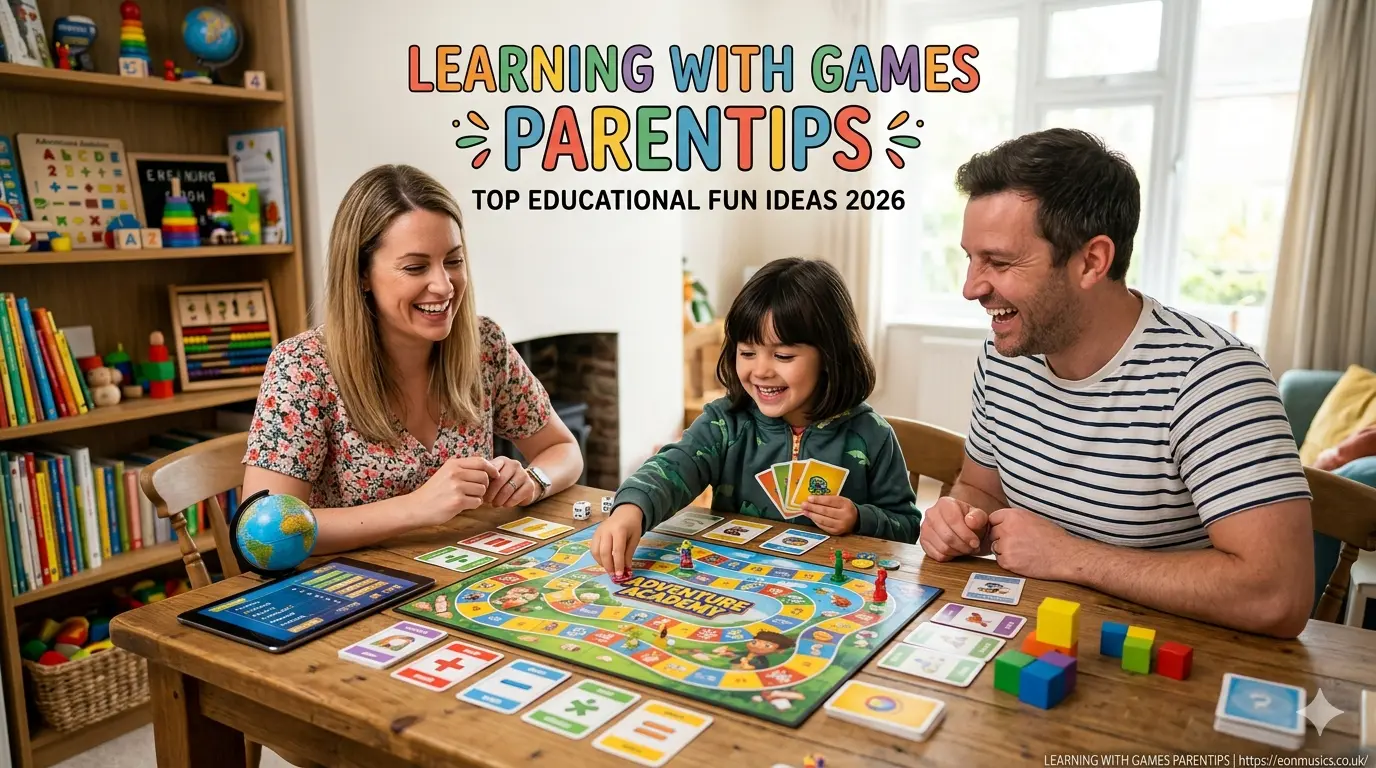
Not all gaming happens on a screen. Board games and scavenger hunts are vital components of learning with games parentips. These physical activities develop spatial awareness and fine motor skills. Mixing digital and physical play ensures a well-rounded developmental experience for every child.
Setting Healthy Boundaries for Screen Time
Balance is the key to sustainable growth. Experts suggest setting a “Family Media Plan” that designates tech-free zones like the dining table. With learning with games parentips, you focus on the quality of the content rather than just counting the minutes spent on a device.
Using Data to Track Academic Progress
Modern educational apps often include parent dashboards. These tools show you exactly where your child excels and where they need extra help. Learning with games parentips encourages you to use these insights to supplement their schoolwork with targeted play.
Creating a Shared Family Experience
The best way to encourage a child is to join them. Play a round of a logic puzzle or a trivia game together. This shared participation is a core pillar of learning with games parentips, as it shows your child that learning is a lifelong, enjoyable pursuit.
Common Questions About Learning with Games Parentips
How do I know if a game is truly educational?
Check for clear learning objectives and a lack of intrusive ads. Truly educational games focus on skill mastery and provide feedback that helps a child learn from their errors.
Can games really replace traditional homework?
While they shouldn’t replace it entirely, they serve as a powerful supplement. Using learning with games parentips helps reinforce concepts learned in class through active application rather than rote memorization.
What is the best age to start educational gaming?
Most experts suggest waiting until age two for any screen time. Once they reach that milestone, start with simple, high-contrast games that focus on basic recognition and interaction.
Does gaming impact a child’s attention span?
High-quality educational games can actually improve “attentional control.” Unlike fast-paced cartoons, these games require the child to focus on specific tasks to progress.
Are free games as good as paid ones?
Some free apps like Khan Academy Kids are world-class. However, always be wary of “free” games that use predatory micro-transactions or excessive advertising.
How many hours should my child spend on learning games?
For children aged 6-12, 1 to 2 hours of balanced, high-quality screen time is generally recommended. Always prioritize outdoor play and sleep over any digital activity.
Final Thoughts for Proactive Parents
Embracing learning with games parentips is about more than just finding a fun app; it is about changing your family’s relationship with technology. You have the power to turn a potential distraction into a lifelong love for discovery. Start by picking one game today that aligns with your child’s current interests and watch their confidence soar.