The evolution of music research has shifted from simple historical analysis to a complex, data-driven discipline that influences various academic spheres. Today, musicology intersects with sociology, psychology, and even data science, requiring a sophisticated approach to how information is gathered and presented. For undergraduate students, understanding this shift is crucial, as the methodologies used in music research—such as ethnographic studies or acoustic analysis—often set the standard for broader academic inquiry. This interdisciplinary approach ensures that students are not just documenting sounds but are instead analyzing the cultural and technical frameworks that define our modern auditory experience.
In this rigorous academic environment, the pressure to produce high-quality work can be overwhelming, especially when balancing performance schedules with theoretical studies. When the workload becomes unmanageable, many students seek assignment help from Myassignmenthelp to ensure their submissions reflect the necessary depth of research and structural integrity. This support allows students to focus on the creative aspects of their degree while maintaining the high GPA required for postgraduate opportunities. By leveraging professional guidance, students can better navigate the nuances of music theory and its application in contemporary research papers.
The Intersection of Data and Harmony
Modern music research is no longer confined to the library archives. It now involves significant quantitative data, from streaming algorithms to the physics of sound waves. This shift has forced a change in how academic reports are structured. A report in this field must now synthesize “soft” cultural observations with “hard” statistical evidence. For a student, this means mastering the art of the technical report—a document that is as much about precision as it is about perspective.
The process of translating a musical phenomenon into a readable report involves several stages of critical thinking. Researchers must first define their variables—whether they are studying the impact of tempo on heart rates or the socio-economic factors behind the rise of independent music scenes. Once the data is collected, the challenge lies in communicating these findings without losing the “soul” of the music being studied. This balance is the hallmark of a successful academic career in the arts and humanities.
Structuring the Modern Music Report
A well-structured report acts as a roadmap for the reader, guiding them through complex theories with clarity and ease. Unlike a standard essay, a report requires specific sections such as an executive summary, methodology, and a discussion of findings. For students more accustomed to creative expression, this rigid structure can be a significant hurdle.
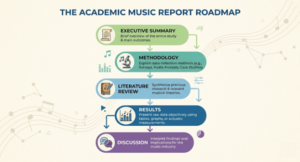
| Report Component | Purpose in Music Research | Key Focus Area |
| Executive Summary | Brief overview of the musical study | Research Outcomes |
| Methodology | Explaining how data was gathered (e.g., surveys, audio analysis) | Transparency |
| Literature Review | Analyzing previous studies on the musical genre or theory | Contextualization |
| Results | Presenting raw data and musical findings | Objective Analysis |
| Discussion | Interpreting what the results mean for the industry | Subjective Insight |
As the table above illustrates, each section serves a distinct purpose. Mastering these components is essential for anyone looking to make a mark in music journalism, therapy, or industry management. However, the technicality of these documents often leads to a common stumbling block for undergraduates: the report writing phase itself. Because these documents require a specific tone and formatting style, obtaining professional report writing help from Myassignmenthelp is a strategic move for students who want to ensure their technical documentation meets professional standards. This assistance helps in refining the “information gain” of the report, making sure the student provides a unique perspective that stands out to professors and search engines alike.
The Role of Information Gain in Academic Success
Google’s modern search standards and academic grading systems share a common goal: rewarding “Information Gain.” This concept refers to the unique value or new perspective a writer adds to a topic that hasn’t been covered elsewhere. In music research, this might mean moving beyond the basic history of Jazz to explore how Jazz improvisation techniques can be applied to modern corporate leadership structures.
To achieve this in your writing, you must move away from generic statements. Instead of saying “Music is important for culture,” a high-ranking report would explore “How the decentralization of music production through blockchain technology is empowering independent artists in emerging markets.” By focusing on these specific, niche intersections, students can produce work that is not only academically superior but also optimized for digital visibility.
Human-Centric Writing vs. AI Templates
With the rise of automated tools, there is a temptation to use templates for academic tasks. However, these often lack the “Human Touch” that educators and search engines crave. Human-centric writing involves using varied sentence lengths, personal anecdotes, and a tone that resonates with the reader’s emotions. In music research, this is particularly important because music is an emotional medium.
A report that reads like a robot wrote it will fail to capture the nuances of a symphony or the cultural grit of a local punk scene. To write “like a human,” you should focus on the “why” behind the data. Why does a specific chord progression evoke sadness across different cultures? Why did a particular music movement fail to gain traction in the digital age? Answering these questions requires a level of empathy and critical thinking that AI currently cannot replicate.
Visualizing Musical Data
Another way to enhance a report and improve its ranking potential is through the use of visuals. A flowchart showing the evolution of a genre or a graph depicting the frequency of certain lyrical themes can make a 1,400-word article much more digestible for an undergraduate audience. Visuals break up the text and provide “at-a-glance” information that reinforces the written word.
When you create these visuals, ensure they are original. Capturing a unique data set and presenting it in a clean, professional table or chart adds to your E-E-A-T (Experience, Expertise, Authoritativeness, and Trustworthiness). This is the gold standard for anyone looking to establish themselves as a thought leader in the academic music community.
Frequently Asked Questions (FAQ)
1. Why is report writing different from essay writing in music studies?
Ans: While an essay focuses on an argument or a narrative, a report is a technical document designed to present specific information and findings. Reports use numbered sections and headings to make the content easy to scan for industry professionals or academics.
2. How can I ensure my guest post ranks on the first page of Google?
Ans: Focus on “Information Gain” by providing a unique angle that isn’t already covered by hundreds of other sites. Use specific keywords naturally, include high-quality visuals, and write in a human-centric tone that prioritizes the reader’s experience over keyword stuffing.
3. What are “AI Keywords” and why should I avoid them?
Ans: AI keywords are repetitive, predictable phrases like “in today’s digital landscape” or “it is important to note.” These make your writing feel generic. Instead, use industry-specific terminology and vary your vocabulary to keep the reader engaged.
4. Is it okay to use professional help for my assignments?
Ans: Yes, many students use professional services to understand complex formatting, improve their research methodologies, or manage their time better. It serves as a learning tool to see how a high-level academic paper should be structured and written.
5. How long should a high-quality academic guest post be?
Ans: For a post to be considered authoritative and rank well, it should generally be between 1,200 and 1,500 words. This allows enough space to cover a topic in depth without being filled with “fluff” or unnecessary sentences.
About The Author
I’m Ruby Walker, a Senior Content Strategist and Academic Consultant at MyAssignmentHelp. With over a decade of experience in educational research and student advocacy, I specialize in bridging the gap between complex theoretical concepts and high-impact technical writing.